Almost Debt-Free? That's Exactly Why Your Credit Union Called

A deep dive into credit union Principal Reload offers in Barbados. Learn how these 'hassle-free' loan top-ups can double your debt timeline, the pledged shares trap, and the math you need to do before signing anything.
You've been paying your loan faithfully for years. Every week, the money comes out of your salary like clockwork. Then the letter arrives—or the phone call.
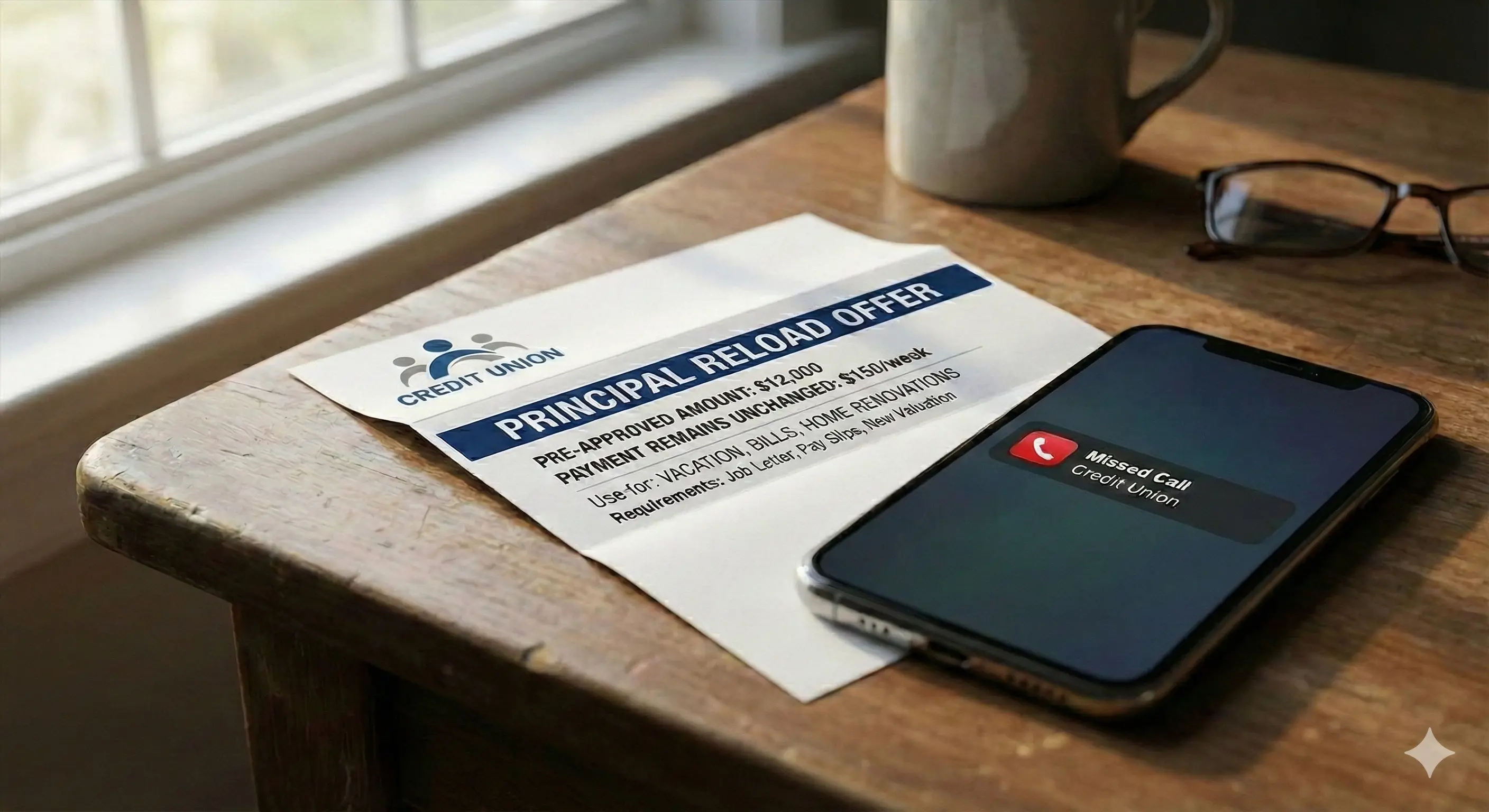
"You've been such a wonderful customer. We'd like to offer you a Principal Reload."
No new paperwork. Same weekly payment. Cash in your account by Friday. The letter might even suggest you use the money for renovations, bills, or "even a vacation."
It feels like a reward. It isn't.
What's Actually Happening: The "Refill" Trap
Think of your loan like a bucket. When you started, the bucket was full of debt.
Over the years, you've worked hard to empty it. Now you're close to the bottom—maybe two years away from being debt-free.
That's when the call comes. A "Principal Reload" isn't a new loan. The credit union is offering to refill your bucket back to the top.
- The Pitch: "You've paid off $18,000. You can borrow that $18,000 again!"
- The Trap: When you say yes, you reset the clock.
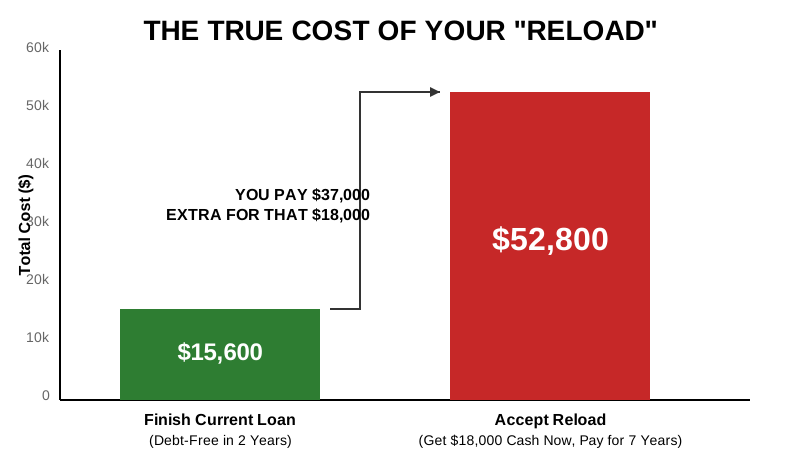
Instead of finishing in 2 years, you restart a 7-year countdown. You're voluntarily walking from the finish line back to the starting line.
The Real Cost: With just 2 years of payments left, accepting the $18,000 reload locks you into 7 more years. That's $37,000 extra—for $18,000 in hand.
(This example assumes $150 weekly payments at 14% interest. Your numbers will vary.)
The "Hassle-Free" Myth
These letters often describe the process as "hassle-free," implying you can just sign and walk away with the cash.
Read the fine print. To get this "reward," you often still need to provide:
- A recent Job Letter
- Two months of pay slips
- (If it's a vehicle loan) A new valuation and updated insurance
If they ask for a valuation, you're paying around $50 out of your own pocket just to apply. And if you use that money for a vacation as they suggest, you are securing a one-week trip against your vehicle. If you default three years from now, they don't just call you—they can take the car.
PRO-TIP: The Timing Is Not a Coincidence
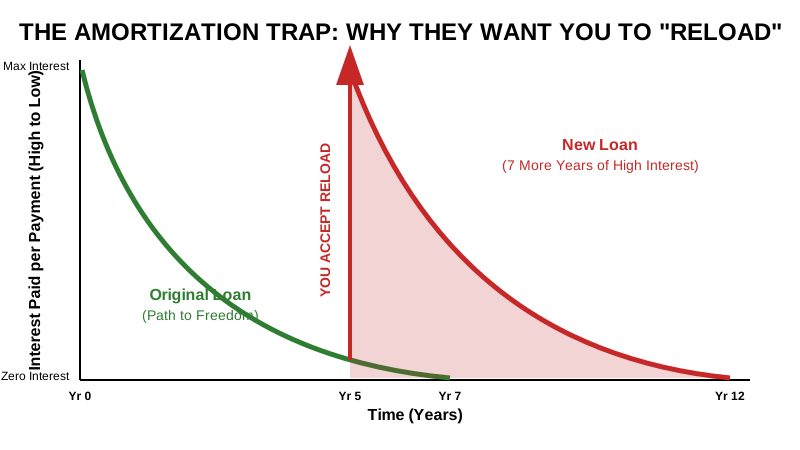
These offers don't arrive randomly. You typically qualify for a reload once you've paid down a certain percentage of your loan—which happens to be right when the balance shifts in your favor. This is called amortization—the way loans are structured so you pay mostly interest early on and mostly principal (the actual amount you borrowed) later. The reload resets you back to the interest-heavy phase.
The Hidden Cost of Pledged Shares
Many credit union loans include a forced savings component—often called Pledged Shares.
In your weekly payment of $150, a chunk (say, $18.00) doesn't go toward the loan. It goes into your Primary Shares account—and it's locked as collateral until the debt is cleared.
This is why reloads feel easier to accept. You tell yourself: "At least I'm building savings."
And you're right—the savings are real. But you're still paying 14% to save at less than 1%. Over 7 years, that gap adds up.
Where Your $150 Actually Goes
Your payment stays the same ($150), but the amount actually paying off your loan drops from $100 to $51.
What to Ask Before You Sign
If you're considering a reload, get these answers in writing. Don't settle for "your payment stays the same." Ask:
- The Term Extension: "How many years does this add to my payment plan?"
- The Total Interest: "What is the total dollar amount of interest I will pay over the full life of this new term?"
- The Requirements: "Do I need to pay for a new valuation or provide new job letters?"
Then do the maths yourself. How much extra will you pay over the life of the new loan? That's the true price of the cash.
When a Reload Might Make Sense
Rarely. But if you have a genuine emergency—medical bills, urgent home repairs—and no other options, a reload at least keeps your payment manageable.
Just know the cost. And if you're borrowing for a vacation or "nice to have" purchases, the answer is almost always no.
The Path to Zero Debt
Here's what happens if you finish your current loan:
That $150 per week becomes yours. Not the credit union's. Yours.
That's $7,800 a year you could save, invest, or use for those repairs—without paying interest for the privilege.
More than the money, there's the weight that lifts. The freedom to leave a job that's grinding you down. The security of knowing an emergency won't break you. The option to retire when you're ready, not when your loan says you can.

The Bottom Line
Credit unions are a vital part of our financial landscape, but loyalty shouldn't be expensive. The "Principal Reload" relies on you looking at the weekly payment, not the total cost.
The next time that letter arrives, look past the "cash in hand." Do the maths. The answer usually speaks for itself.
Your Next Step: Pull out your last loan statement. Find the remaining balance and the number of payments left. That's your finish line. Now ask yourself: is that cash offer worth moving it years further away?
The example in this article uses a 14% interest rate and $150 weekly payments. Your rate, payment amount, and frequency (weekly or monthly) may differ, but the principle remains: multiply your payment by the number of payments remaining to see what finishing your loan actually costs, then compare that to the reload offer.
Note: While this article focuses on credit unions, commercial banks play the same game. When your loan is nearing its end, expect a call offering to extend it—resetting how much they earn from interest instead of your payments going toward principal.
Questions about this topic?
Financial terms can be confusing. If you have questions about the article or ideas for what I should cover next, send me a DM.
Chat on Instagram